


Shanghai Songjiang Vibration Absorber Co., Ltd. is pleased to present information on rubber expansion joints for high-speed wire rod finishing mills lubrication stations. Songjiang Group provides high-quality rubber expansion joints for numerous lubrication stations associated with high-speed wire rod finishing mills, with a 3-year warranty.
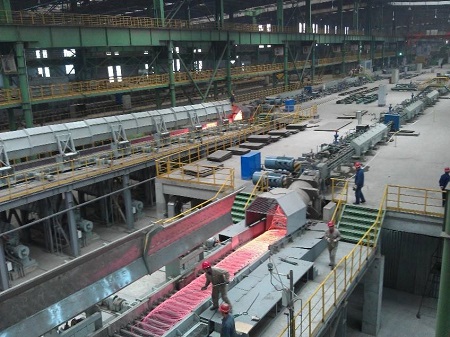
As the rolling speed of the mill continues to increase, higher demands are placed on the lubrication system. Moreover, with the development of science and technology, new techniques and methods are continuously applied to control the lubrication system with thin oil.
High-speed wire rod refers to steel wire rods produced using high-speed rolling mills. These wire rods are divided into two categories: threaded steel and coiled round. Part of the coiled round wire rods, depending on the type of mill used, are further classified into high-speed wire rods (high lines) and ordinary wire rods (regular lines).
High lines are produced using high-speed wire rod rolling mills, characterized by fast production pace, larger coils (typically entire coils in the package, with a maximum coil weight of up to 2500 kg), tight packaging, and aesthetically pleasing appearance.
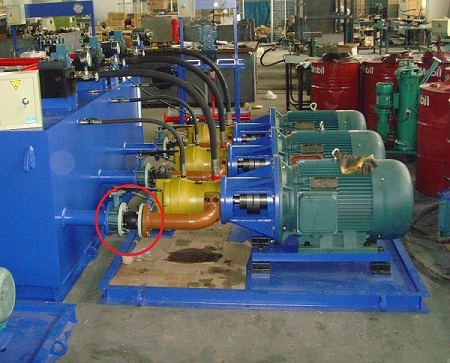
High-speed wire rod finishing mill lubrication station rubber expansion joints
High lines refer to coils produced using “high-speed non-twist rolling mills”. The rolling speed ranges from 80 to 160 meters per second, with each coil weighing between 1.8 to 2.5 tons and achieving high dimensional accuracy (up to 0.02mm). The rolling process allows for different product requirements to be met by adjusting process parameters, especially on the cooling line.
Regular lines refer to coils produced using “ordinary rolling mills (usually cross-arranged dual-groove rolling mills)”. The rolling speed ranges from 20 to 60 meters per second, with each coil weighing between 0.4 to 0.6 tons (commonly seen in the market as three coils bundled into one large coil). During the rolling process, product performance is maintained only through air or water cooling on the cooling line. Regular lines are typically rolled with ordinary rolling mills, resulting in smaller coil weights, loosely packed coils, and relatively disorderly packaging.
The finishing mill is used in high-speed wire rod workshops, generally composed of four rolling mills arranged alternately. The rolling mills are equipped with chockless roll rings and arranged in a flat-vertical pattern. The rolls are fitted with vertical sliding bearings to enable tension-free rolling.
The finishing mill is positioned either between the roughing mill or behind the hot coil box. Its equipment composition includes a front-end flying shear roller table, front-end flying shear side guide, front-end flying shear speed measurement device, edge heater, front-end flying shear and collection device, descaling box, front vertical roller rolling mill (FIE), finishing mill, sliding bearing device, inlet and outlet guide plates for the finishing mill, dust removal device, and roll changing device.
The finishing mill is the core component of hot-rolled strip production and the quality of the rolled products mainly depends on the technological equipment level and control level of the finishing mill unit. Therefore, to obtain high-quality products, many new devices, technologies, processes, and high-precision detection instruments are extensively used in the finishing mill unit, such as hot-rolled strip shape control equipment, fully hydraulic pressure device, optimized cutting device, and hot-rolled oil lubrication technology. Additionally, to protect equipment and operational environments from pollution, dust removal devices are installed in the finishing mill unit.
After rough rolling, the slab thickness generally ranges below 50mm, with some special products up to 60mm. The head and tail sections of the slab exhibit irregular fish tail or tongue shapes due to the free state at the slab ends. Irregular head and tail shapes can lead to strip breakage accidents during strip threading through the finishing mill unit or entry into the coiler. Furthermore, due to low temperatures at the head and tail, roll marks can easily occur on the roll surface, affecting the surface quality of the strip steel. To prevent these problems, the head and tail of the slab need to be cut to lengths of 100 to 150mm using a flying shear. After shearing, the slab passes through a descaling box to remove iron oxide scale from the surface using high-pressure water (15.0 to 17.0MPa), and then enters the finishing mill unit to be rolled into the required strip steel dimensions.
For some special varieties, such as silicon steel, stainless steel, and cold-rolled deep-drawing steel, the edge portion of the slab is heated before entering the finishing mill unit to ensure uniform temperature distribution across the slab cross-section. This ensures that the strip steel has consistent microstructures and properties across its cross-section, while also avoiding edge cracking and severe uneven wear on the rolls due to low edge temperatures.
The thin oil station is the heart of the thin oil circulation lubrication system, responsible for forcefully delivering lubricating oil to machine friction parts. Thin oil stations are mainly used in centralized lubrication systems for machinery equipment in metallurgy, mining, cement, and other industries, typically installed in underground oil depots or pits near the machinery.
Thin oil stations are essential for the normal operation of equipment such as blowers. Severe leakage during operation can cause serious damage to the executive components, leading to major shutdowns and production stoppages. Even minor leaks can have adverse effects on the onsite environment and safety production. Traditional repair methods require dismantling and maintenance, resulting in significant downtime and affecting continuous production. Polymer composite materials can be used for rapid onsite treatment, demonstrating characteristics of quickness, convenience, and durability during the repair process. This allows for leak repair without or with minimal downtime.
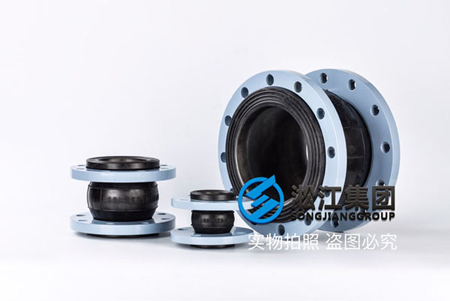
Related links:【Wear-resistant】Single-ball wear-resistant rubber expansion joint with “added wear-resistant device


