


The best practice to prevent rubber expansion joint detachment starts with proper use of fastening bolts.
The Technical Department of Shanghai Songjiang Shock Absorber Group Co., Ltd. introduces the tightening procedure for flange bolts during the installation of Shanghai Songjiang rubber expansion joints and the requirements for tightening.
Shanghai Songjiang Shock Absorber Group Co., Ltd. Technical Department introduces the following steps:
- Ensure all flange bolts and nuts are properly matched and free from looseness or damage.
- Use the correct torque wrench or torque spanner and follow the specifications and recommendations provided by the manufacturer to gradually tighten all bolts one by one.
- Tighten the bolts in a cross-pattern sequence to ensure even pressure is applied to all flanges.
- Ensure the nuts are properly aligned and parallel to the flange surface to avoid asymmetrical or lateral pressure.
- Before tightening, apply an appropriate amount of lubricant or rust inhibitor to the threads of the bolts and nuts to ensure smooth tightening.
- During tightening, make sure not to over-tighten the bolts to avoid damaging the flange or rubber expansion joint.
- After tightening, carefully inspect each bolt and nut to ensure they are in the correct position and securely fastened.
- If necessary, perform additional checks and adjustments to ensure the integrity and safety of the installation.
By following these steps, you can ensure that the flange bolts of the rubber expansion joint are properly tightened, thereby preventing detachment and other related issues.
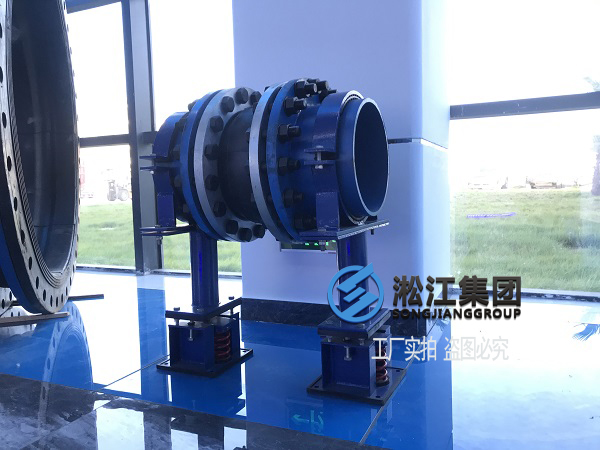
Only by correctly tightening the bolts on the rubber joint can the rubber joint be used more safely.
Regarding the requirements for tightening the flange bolts during the installation of rubber expansion joints, many construction sites have loose bolts on the flanges. The flange bolts need to be symmetrically tightened step by step, using a torque wrench to achieve the optimal tightness.
Especially for large-diameter rubber joints and high-pressure pipelines, the fastening bolts must be tightened. Only by tightening the bolts can the flange on the rubber joint and the flange welded on the pipeline firmly press the rubber sealing surface, avoiding the detachment of the rubber sealing surface. When the pressure on the rubber joint exceeds 12kg, the rubber ball will be subjected to pressure from the pipeline, causing it to expand outward. At this time, the area under the most stress is the rubber sealing surface inside the flange groove. Only with the bolts tightened sufficiently, can the flange clamp the sealing surface tightly enough to prevent the rubber joint from detaching. The common problem with rubber joints in pipelines is the occurrence of detachment. Only by tightening the bolts during installation can the first step be taken to prevent detachment of the rubber joint.
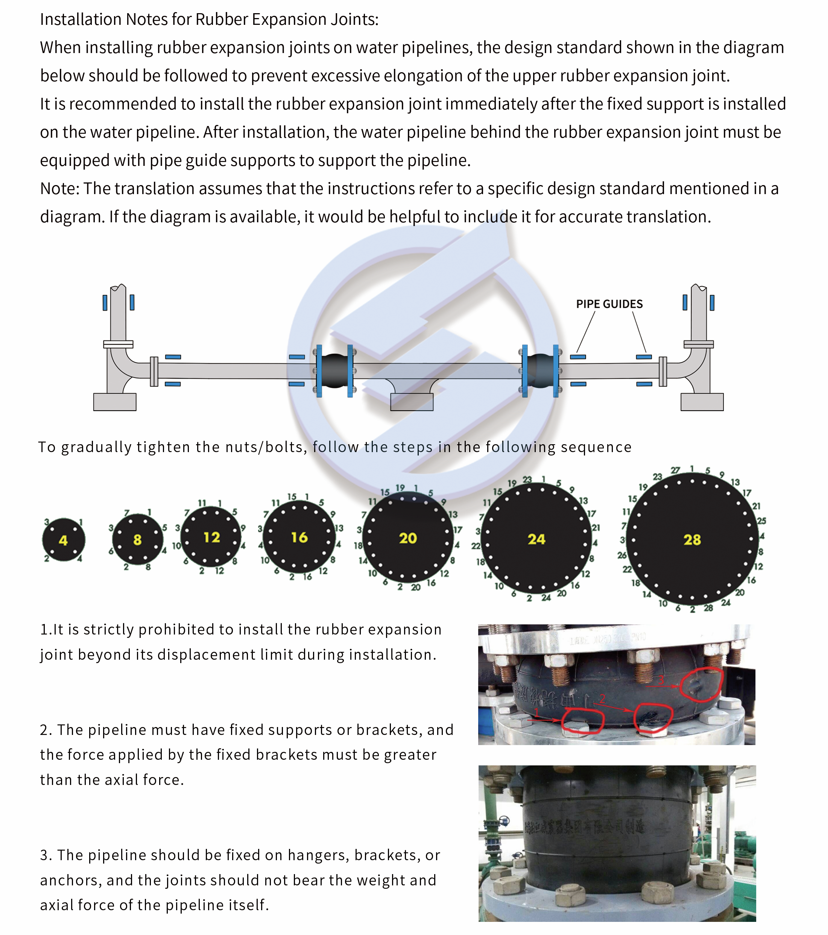
After the pipeline pressure test is completed and the equipment operates normally for 20 to 30 days, the bolts of the rubber joint may loosen due to initial equipment vibrations. At this point, it is necessary to conduct a bolt inspection to check for any loosening caused by vibration. If any loose bolts are found, they should be re-tightened to prevent the occurrence of detachment of the rubber joint.
When tightening the flange screws, please use the correct torque:
- To allow the rubber expansion joint to stretch to its maximum displacement and to protect the surface of the product, insert the screws from the flange opening connected to the rubber expansion joint.
- The surfaces of the threads and nuts should not have any burrs.
- To ensure tight contact between the product and the pipe fitting, tighten the screws diagonally.
Refer to the following torque data:
For product sizes smaller than 3″ (80mm): 60Nm (maximum)
For product sizes larger than 4″ (100mm): 80Nm (maximum)
Please follow the correct installation method described above when using rubber expansion joint products to avoid the occurrence of rubber detachment and resulting losses.


